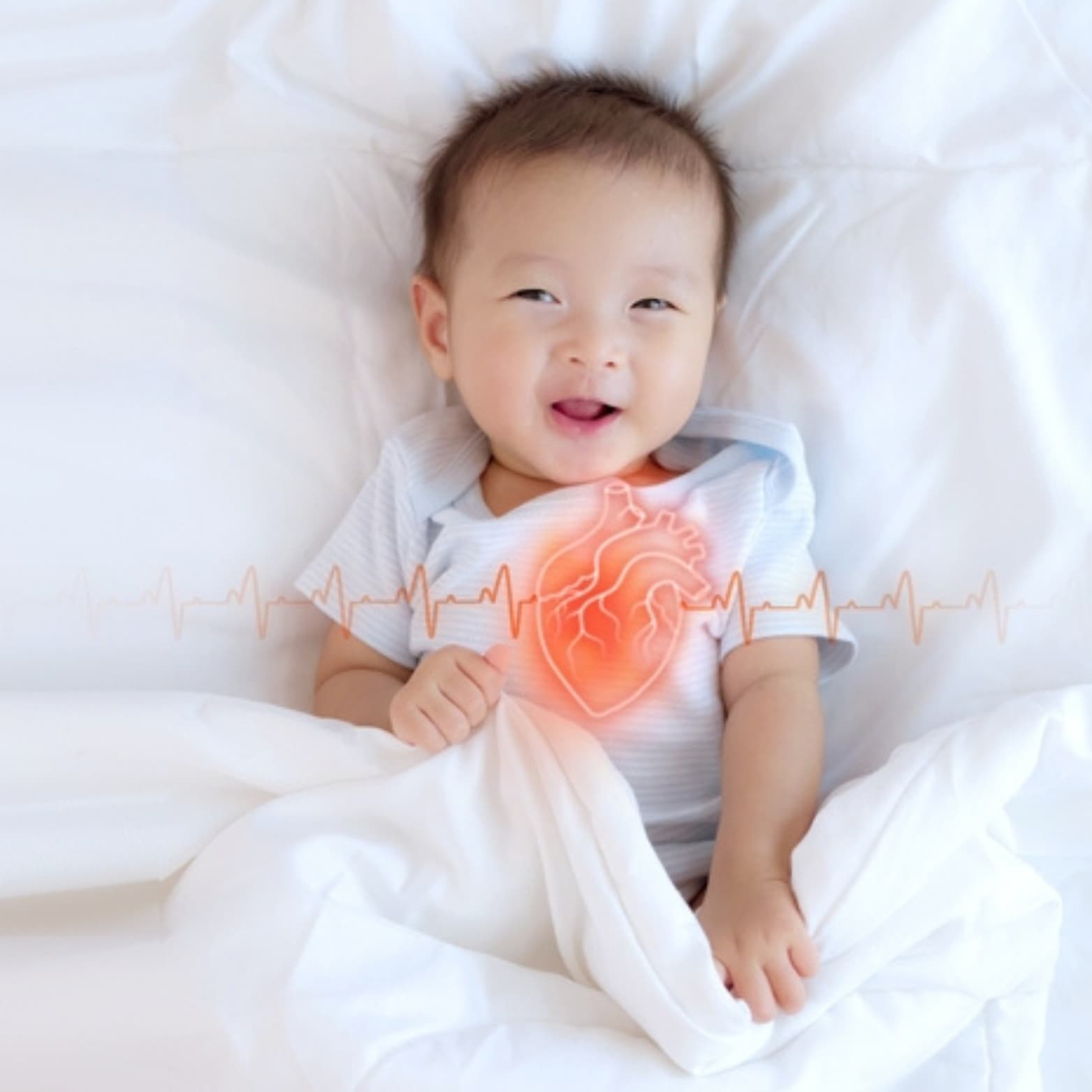
Congenital Heart Defects
What are Congenital Heart Defects?
Congenital heart defects (CHDs) are structural problems with the heart that are present at birth. These defects can affect the heart's walls, valves, and blood vessels, leading to issues with blood flow through the heart. CHDs can vary widely in severity, ranging from simple defects that may not require treatment to complex conditions that can lead to serious health complications. Common types include septal defects (holes in the heart walls), coarctation of the aorta, tetralogy of Fallot, pulmonary stenosis, and transposition of the great arteries. Diagnosis often involves echocardiograms, chest X-rays, and MRI. Treatment may include medication, catheter procedures, or surgery.
Indications
Treatment for congenital heart defects is indicated based on type and severity:
- Septal defects (atrial or ventricular) causing abnormal blood flow between heart chambers
- Coarctation of the aorta leading to high blood pressure and heart damage
- Tetralogy of Fallot — a complex combination of four heart defects
- Pulmonary stenosis obstructing blood flow from the right ventricle
- Transposition of the great arteries — a life-threatening reversal of the main arteries
Who needs treatment for congenital heart defects?
Individuals diagnosed with structural heart problems present from birth may require intervention depending on the type and severity of the defect:
- Septal defects (ASD/VSD): Holes in the walls separating heart chambers causing abnormal blood mixing.
- Tetralogy of Fallot: A complex condition involving four simultaneous heart defects.
- Transposition of great arteries: The two main arteries are reversed, causing oxygen-poor blood to circulate.
- Coarctation of the aorta: Narrowing of the aorta restricting blood flow to the body.
Other conditions that may require Congenital Heart Defects include: Pulmonary stenosis, Atrioventricular septal defect, Patent ductus arteriosus (PDA), Hypoplastic left heart syndrome.
Early detection and intervention are crucial for improving outcomes. Many children with CHDs can lead full, active lives with appropriate treatment.
Donor information
Congenital heart defect treatment may involve heart valve replacements using donor tissue (homografts) or mechanical/biological prosthetics. Living donation is not typically applicable for CHD treatment.
Treatment eligibility
- Confirmed diagnosis of a structural heart defect via echocardiogram or imaging
- Assessment of defect severity and its impact on heart function
- Evaluation of overall health and ability to tolerate surgery or catheter procedures
- Age-appropriate assessment for pediatric patients
- Genetic counseling in cases involving chromosomal syndromes
- Psychological and family support evaluation for complex cases
Evaluation process
Diagnosis involves echocardiography, chest X-rays, MRI, and cardiac catheterization in some cases. A multidisciplinary pediatric cardiology team evaluates each case to determine the best surgical or interventional approach.
What are our services?
We are offering the following specialized services to all patients at renowned hospitals in India and Türkiye. Our organization is proudly partnered with multiple accredited hospitals across both countries, known for their strong reputations, state-of-the-art infrastructure, and patient-centric approach.
These hospitals provide a world-class healthcare environment with excellent ambience, comprehensive diagnostic and treatment facilities, and strict infection control protocols. Each center is equipped with advanced medical technology and a highly skilled multidisciplinary team capable of managing even the most complex cases. With a strong track record of successful outcomes, these hospitals ensure quality care at every step of the patient journey — from pre-treatment evaluation and surgery to post-operative care and long-term follow-up.